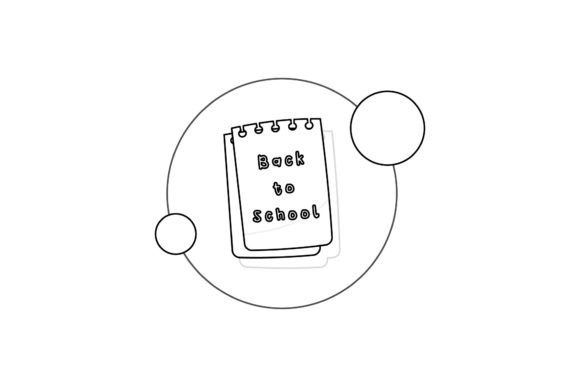
Back to School Note Line Style Vector Design: A Complete Guide for Creatives and Educators
As the back-to-school season approaches, educators, designers, and business owners alike look for fresh, engaging visuals that capture the energy of learning and creativity. One style that has gained significant traction in recent years is the Back to School Note Line Style — a clean, minimal, and highly versatile design approach that combines the charm of hand-drawn line art with the precision of vector graphics. Whether you are designing a logo for a tutoring center, creating illustrations for classroom materials, or brainstorming ideas for a t-shirt line, this style offers a unique blend of simplicity and expressiveness. In this article, we will explore everything you need to know about Back to School Note Line Style Vector Design — from its core elements and practical applications to the technical advantages of vector files and how to use them effectively in your projects.
What Is Back to School Note Line Style Vector Design?
At its heart, the Back to School Note Line Style is a visual language that uses clean, single-weight lines to depict familiar school-related objects and scenes. Think of a notebook page where every doodle — a pencil, an apple, a ruler, a backpack, or a chalkboard — is drawn with consistent, deliberate strokes. The "note line" refers to the ruled lines of a notebook, which often serve as a background or compositional guide in these designs. When combined with vector technology, these line-art illustrations become infinitely scalable, editable, and adaptable without ever losing quality.
This style is particularly popular for its minimalist aesthetic and its ability to convey complex ideas in a straightforward, approachable way. Because the designs are built from simple lines, they feel both nostalgic (evoking the school notebooks of our childhood) and modern (aligning with current trends in flat and line-based illustration). The result is a design resource that works beautifully across a wide range of media — from logos and branding materials to animations, t-shirt graphics, and digital presentations.
Why Choose Note Line Style for Back to School Designs?
The appeal of the note line style lies in its versatility and clarity. Unlike highly detailed illustrations that can overwhelm a composition, line art allows the viewer to focus on the essential shape and meaning of each object. This makes it especially effective for educational contexts, where visual clarity is paramount. Here are a few key reasons why creatives and educators are turning to this style:
- Simplicity and Elegance: The clean lines and uncluttered designs make every element easy to recognize and remember.
- Scalability: As vector graphics, these designs can be resized from a tiny app icon to a massive banner without any pixelation or loss of detail.
- Easy Customization: With editable AI and EPS files, you can change stroke colors, line weights, and even add your own color fills or gradients.
- Cross-Platform Compatibility: The included SVG, PNG, and JPG formats ensure the designs work in web, print, and social media environments.
- Cost-Effective: A single vector pack can be used for dozens of different projects, saving time and money for freelancers, small businesses, and educators.
Key Elements of Back to School Note Line Style Graphics
To fully appreciate this design genre, it helps to understand the recurring motifs and visual rules that define it. Most note line style sets include a curated collection of school-themed icons and illustrations, each drawn with a unified line quality. Common elements include:
- Pencils and Pens — often shown with sharp tips, erasers, and sometimes paired with a notebook.
- Notebooks and Paper — featuring ruled lines, spiral bindings, or folded corners.
- Apples — a classic symbol of education, frequently drawn with a leaf and a simple stem.
- Rulers and Protractors — emphasizing the precision of learning tools.
- Backpacks — with zippers, pockets, and straps rendered in clean outlines.
- Chalkboards and Whiteboards — sometimes including a piece of chalk or an eraser.
- Books — open, closed, or stacked, often with visible pages or bookmarks.
- Graduation Caps — for projects that celebrate achievement and milestones.
The line weight is typically uniform or varies only slightly, giving the entire set a cohesive, hand-drawn feel. Some designers choose to add a single accent color (like red for an apple or blue for a notebook) to create visual interest while preserving the minimalist core.
Practical Applications Across Industries
The beauty of the Back to School Note Line Style Vector Design is its cross-industry relevance. Below are some of the most common and effective use cases:
In Education
Teachers and curriculum developers can integrate note line graphics into worksheets, lesson plans, flashcards, and classroom posters. The simple lines make printed materials easy to photocopy or project, and the familiar objects help young learners connect with the content. School websites and newsletters also benefit from these clean, professional visuals.
In Business
Educational startups, tutoring centers, bookstores, and school supply brands can use note line style elements in their logos, brochures, and social media campaigns. The style conveys a sense of trustworthiness, creativity, and focus — qualities that parents and educators value. For example, a tutoring service might use a pencil and notebook icon as its logo, paired with a clean sans-serif typeface.
In Creative Projects
For designers and illustrators, note line vector packs are a goldmine. Use them to create t-shirt designs, stickers, tote bags, greeting cards, and wall art. Because the files are fully editable, you can combine elements, change colors, and adapt the style to suit different audiences. Animators also love this style for explainer videos and motion graphics, as the simple lines are easy to animate and keep the viewer's attention on the message.
In Technology
App developers and web designers can use note line icons for educational apps, e-learning platforms, or productivity tools. The SVG format is especially useful for responsive websites, as it scales perfectly on any screen size. The consistent line style provides a cohesive user interface that feels both playful and professional.
Understanding Vector File Formats: AI, EPS, PNG, JPG, SVG
One of the most powerful aspects of premium Back to School Note Line Style Graphic downloads is the inclusion of multiple file formats. Each format serves a specific purpose, and having them all ensures you can work in any software or output medium. Let's break down what these formats are and when to use them:
- AI (Adobe Illustrator) 10 File: This is the native format for Adobe Illustrator, one of the most popular vector editing programs. Opening an AI file gives you full access to layers, paths, and editable shapes. You can change stroke colors, adjust line weights, and rearrange elements exactly as you need.
- EPS (Encapsulated PostScript) 10 File: EPS is a universal vector format that can be opened in a wide variety of design applications (CorelDRAW, Affinity Designer, Inkscape, etc.). It retains all vector properties and is ideal for sharing files with collaborators who use different software.
- PNG (Portable Network Graphics): A raster format with a transparent background, perfect for web use, social media graphics, and presentations. PNG files preserve crisp edges and are ideal for placing line art on colored backgrounds.
- JPG (Joint Photographic Experts Group): A compressed raster format suitable for general use, especially when file size matters. JPGs do not support transparency but are widely compatible with all devices and platforms.
- SVG (Scalable Vector Graphics): An open-standard vector format used on the web. SVG files are small, scalable, and can be styled with CSS. They are perfect for responsive websites, app icons, and interactive graphics.
Common Misunderstanding Clarified: Some users assume that vector files are difficult to edit or require expensive software. While professional tools like Adobe Illustrator offer the most flexibility, many free alternatives like Inkscape or even online editors like Canva (with SVG uploads) allow basic editing. The key is that vectors never lose quality when resized — a crucial advantage over raster images that become pixelated when enlarged.
How to Use Back to School Note Line Vector Graphics in Your Projects
Using these vector graphics is straightforward, even for beginners. Here is a simple step-by-step guide to get started:
- Download and Unzip: After purchasing or downloading a pack, extract the files to a dedicated folder on your computer.
- Choose Your Format: For editing, open the AI or EPS file in a vector editor. For quick use in a presentation or social media post, open the PNG or JPG file.
- Open and Explore: In your vector editor, look at the layers panel. Most well-organized packs group elements by object or theme (e.g., "pencils," "books," "rulers").
- Customize: Change stroke colors, add fills, adjust line thickness, or combine multiple icons into a new composition. You can also rotate, scale, or reflect elements to create variations.
- Export for Your Needs: Once you are satisfied with your design, export it in the appropriate format — SVG for the web, PNG for presentations, or a high-resolution print PDF for physical products.
Pro Tip: If you are designing a logo, try using a single note line icon alongside clean typography. The simplicity of the line art will ensure your logo remains recognizable at any size, from a business card to a billboard.
Common Misconceptions About Vector Line Art
Despite its popularity, there are a few misunderstandings about note line style vector graphics that are worth addressing:
- "It's too simple for professional use." In reality, simplicity often reads as sophistication. Many top brands use line art for its clarity and modern appeal.
- "Vectors are hard to edit." With AI or EPS files, editing is as simple as clicking a path and adjusting its properties. Even beginners can change colors or delete elements with a few minutes of practice.
- "Line art is only for children's content." Actually, note line style works well for all ages. It can be playful or elegant depending on color choices, line weight, and composition.
- "All vector packs are the same." Quality varies. Look for packs that offer consistent line weights, a good variety of elements, and well-organized files.
The Role of Note Line Style in Modern Visual Communication
In today's fast-paced digital environment, visuals must communicate instantly. The note line style excels at this because it strips away unnecessary detail and presents the essence of an object or idea. This aligns perfectly with current design trends such as flat design, minimalism, and hand-drawn authenticity. For educators, it means materials that students can decode quickly. For businesses, it means branding that feels approachable and trustworthy. For creatives, it means a flexible toolkit that can be adapted to nearly any project.
Moreover, the nostalgic quality of notebook line art resonates with audiences on an emotional level. It reminds us of learning, growth, and the simple tools that shaped our education. By using these visuals, you tap into that shared memory while presenting it in a fresh, scalable format.
Tips for Choosing the Right Back to School Note Line Vector Pack
Not all vector packs are created equal. When selecting a set for your projects, consider the following criteria:
- Variety of Elements: A good pack includes a broad range of icons — from stationery to classroom objects to celebratory items like graduation caps.
- Consistent Style: All icons should feel like they belong together. Check for uniform line weights and similar proportions.
- Editable Files: Ensure the pack includes AI or EPS files that allow you to modify colors, strokes, and shapes.
- Multiple Formats: The best packs offer all five formats (AI, EPS, PNG, JPG, SVG) so you are ready for any use case.
- Commercial License: If you plan to sell products (t-shirts, digital assets, etc.), confirm that the license allows commercial use.
Conclusion
The Back to School Note Line Style Vector Design Graphic is more than just a trend — it is a practical, enduring visual language that serves educators, designers, and business owners alike. Its clean lines, nostalgic charm, and technical versatility make it an ideal choice for a wide range of applications, from logos and illustrations to animations and t-shirt designs. By understanding the key elements, file formats, and best practices for using these graphics, you can unlock their full potential and create compelling, professional-quality work that resonates with your audience. Whether you are preparing for the school year or simply looking for a fresh design direction, note line style vectors offer a foundation that is both reliable and inspiring.