Teachers Are Magical SVG: Back to School Designs for Creative Projects
Whether you are an educator preparing classroom materials, a small business owner launching a seasonal product line, or a hobbyist looking for a meaningful craft project, the Teachers Are Magical SVG collection offers a versatile starting point. Back-to-school season brings a wave of creative opportunities, and having a reliable set of digital files that work across multiple platforms and applications can simplify your workflow from concept to final product. This article walks through what this collection includes, how it fits into a broader creative process, and how you can integrate it into your own projects efficiently.
What Is the Teachers Are Magical SVG Collection?
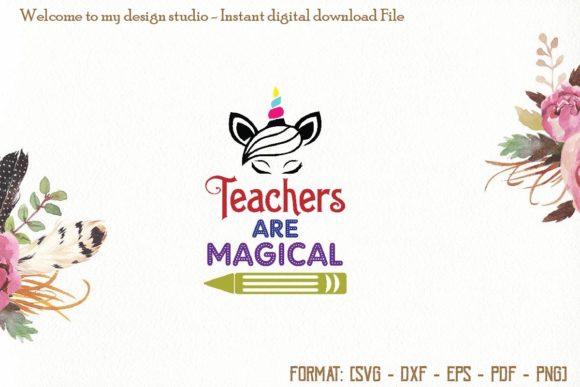
The Teachers Are Magical SVG bundle is a set of digital design files created around the back-to-school theme. The centerpiece design—celebrating the idea that teachers bring a kind of magic to the classroom—can be used for a variety of physical items: t-shirts, tote bags, pillowcases, and more. Because the files come in multiple formats (PNG, SVG, EPS, DXF, PDF), they are adaptable to different software and hardware setups. The collection is specifically packaged to work with Silhouette Studio (Standard, Designer, and Business Editions) as well as Cricut Design Space, making it accessible whether you use a cutting machine for vinyl, print-and-cut, or heat transfer projects.
What makes this collection useful is not just the artwork, but the way it is delivered. High-resolution formats with transparent backgrounds allow you to layer designs, resize them without losing quality, and export them for different use cases. Whether you plan to sell finished products or make gifts for colleagues, the flexibility of these files reduces the need to re-create graphics from scratch.
Where This Fits in a Creative Workflow
Any creative project involves a sequence of decisions: selecting a design, choosing a substrate, preparing the file, cutting or printing, transferring or adhering, and finishing. The Teachers Are Magical SVG collection sits at the front of that sequence—it is the design asset that you choose before you move into production. But it also interacts with later stages. For example, the file format you pick affects how you import the design into your cutting software, which in turn influences whether you use a standard or advanced tool setting.
Before you start, consider what you plan to make. If you want a single-color vinyl sticker, the SVG or DXF format is ideal because vector paths translate cleanly to cut lines. If you need a full-color printed image for a tote bag, the PNG file with a transparent background works well for print-and-cut or direct-to-garment printing. The EPS and PDF formats serve as bridges for users who work in professional design software like Adobe Illustrator or CorelDraw. By understanding which format to use when, you avoid rework and wasted material.
Preparation and Compatibility Checks
One of the first practical steps is ensuring that your design software can read the file you want to use. Silhouette Studio, for instance, handles SVG natively in the Designer and Business Editions, while the Standard Edition may require a DXF or PDF import. Cricut Design Space accepts SVG files without issue. If you are using a free application like Inkscape, the SVG format is ideal. Checking compatibility before you spend time editing prevents frustration later.
Another preparation step is to verify the dimensions of your design relative to your material. The Teachers Are Magical SVG files are typically scaled to a common size (such as 10 inches wide for a t-shirt) but you can easily resize them proportionally. When you scale vector files, there is no loss of quality, so you can size the design up or down without worrying about pixelation. This is especially useful if you want to make multiple items: a larger version for a tote bag and a smaller version for a pencil case.
Practical Implementation for Common Projects
Let us look at three typical projects and how the collection fits into each one.
T-Shirt Transfer Iron-On Vinyl
Heat transfer vinyl (HTV) is a popular medium for decorating t-shirts, and the Teachers Are Magical SVG design works well for this. After you open the SVG file in your cutting software, mirror the design (a standard step for HTV), size it to fit the shirt, and send it to the cutting machine. Weed the excess vinyl, then use a heat press or an ordinary iron to transfer the design onto the garment. Because the design includes clean lines and distinct shapes, weeding is straightforward even for intermediate users.
One workflow consideration: if you are producing multiple shirts for a school team or a small business, you can duplicate the design in your software and arrange several copies on one cutting mat. This reduces material waste and speeds up production. The SVG format preserves the exact same alignment across copies, so each shirt looks consistent.
Bag and Pillowcase Decoration
Tote bags and pillowcases are relatively large, flat surfaces that can handle both vinyl and printable transfers. If you prefer a fabric-friendly approach, the DXF file can be used directly in Silhouette Studio (Standard Edition) for cutting adhesive vinyl or heat transfer material. Alternatively, if you want a colorful, layered look, you can combine the SVG outlines with other elements from the collection to create a multi-color design. For pillowcases, consider using a transfer paper that brushes onto fabric after printing—the PNG file with a transparent background is perfect for this because you can place the design exactly where you want it without a white box around it.
Organization tip: keep a project folder on your computer with subfolders for each format (SVG, DXF, PNG, EPS, PDF). When you load a design into your cutting or printing software, you always know where the original file lives. This habit saves time when you need to revisit a project months later, such as for a future back-to-school season.
Vinyl Sticker Production
Stickers are a classic use case for SVG collections. The Teachers Are Magical SVG design can be turned into a single-color or multi-color vinyl sticker. For a single-color sticker, the vector path is cut from adhesive vinyl, weeded, and applied with transfer tape. For a multi-color sticker, you layer different colored vinyl pieces on top of each other—each layer uses a separate cut file derived from the same SVG. Because SVG files handle layers and groups well, you can assign each part of the design to a different color layer without re-creating the artwork.
For print-and-cut stickers (where you print the design on sticker paper and then cut around it), the PNG file provides a high-resolution raster image with a transparent background. This method is useful if you want gradients or photographic elements that are not possible with layered vinyl. The PDF format can also be used for proofing before you commit to cutting.
Managing File Formats and Software Compatibility
The collection includes six formats: PNG, SVG, EPS, DXF, and PDF. Each serves a specific purpose.
- PNG – Raster image with transparency. Best for print-and-cut, digital mockups, and web use.
- SVG – Scalable vector format. Preferred for Cricut Design Space, Silhouette Designer/Business Editions, and most vector editors.
- EPS – Professional vector format. Works in Adobe Illustrator, CorelDraw, and some cutting software via import.
- DXF – Common in Silhouette Studio Standard Edition and some CAD programs. Useful for users who cannot open SVG directly.
- PDF – Universal document format. Suitable for printing, sharing, and proofing. Can also be imported into some cutting software.
If you use Silhouette Studio Standard Edition, rely on DXF for cutting outlines. Designer and Business Editions can open SVG natively, which gives you more editing control. Cricut Design Space users should import SVG files because they preserve the vector paths and look clean in the software workspace. If you ever encounter a file that does not import correctly, check that you have the latest version of your software—most compatibility issues are fixed by updates.
Integration with Broader Systems and Tools
The Teachers Are Magical SVG collection is a design asset, but it does not exist in isolation. In a small business workflow, these files often interact with inventory management, order processing, and shipping tools. For example, if you run a print-on-demand shop, you might upload the SVG to a platform like Printful or Printify, where it is used to generate mockups and fulfill orders. Alternatively, if you make items by hand, you might pair the SVG with a project management tool like a spreadsheet or Trello board to track which designs you have cut, how many, and for which customers.
For educators and school staff, the designs can be used for classroom decorations, team-building shirts, or gifts for colleagues. They integrate naturally with a school calendar: you plan the projects during summer break, produce them in early August, and have them ready for the first week of school. Because the files are digital, you can reuse them year after year, adjusting the size or color as needed.
Quality Control and Consistency
When you produce multiple items from the same design, consistency matters. The Teachers Are Magical SVG vector files ensure that every cut or print is identical, eliminating the variability you might get from hand-drawn or low-resolution graphics. That said, quality control involves more than the file itself. Check your cutting machine’s blade depth and pressure settings before starting a batch. If you use heat transfer, test your time and temperature on a scrap piece of fabric first. Minor adjustments in these settings can change the final appearance, so running a test piece saves you from ruining the actual garment.
Organize your finished items by size, color, or recipient to avoid mix-ups. If you are fulfilling orders for a small business, use a simple labeling system (sticky notes or tags) to track which shirt goes to which customer. This level of process organization is what turns a one-off craft into a repeatable, efficient operation.
Long-Term Use and Storage
Digital files do not degrade, but your access to them can become messy if you do not store them properly. Keep the Teachers Are Magical SVG collection in a dedicated folder on your computer or cloud storage. Name the folder clearly—something like "Back-to-School 2025 – Teachers Are Magical SVG"—so you can find it quickly when the season rolls around again. Within that folder, maintain separate subfolders for each format. This structure helps you grab the right file whether you are cutting vinyl, printing stickers, or creating a digital mockup for social media.
Consider backing up your files to an external drive or cloud service. If you rely on these designs for your business, losing them could mean hours of lost production time. A simple backup routine—once a month or after a major project—protects your investment.
Over time, you may want to customize the design further. Change the colors to match a school’s palette, add text like a teacher’s name or grade level, or combine the artwork with other elements from the collection. Because SVG files are editable, you can make these adjustments in vector software without starting from scratch. This adaptability extends the life of the design far beyond a single project.
Practical Workflow Example
Let us walk through a typical scenario. You are a small business owner preparing for the back-to-school rush. You plan to sell teacher appreciation t-shirts and matching tote bags. You download the Teachers Are Magical SVG collection and place it in your project folder. Using Cricut Design Space, you import the SVG file, resize the design to 10 inches wide for adult shirts and 7 inches for kids’ sizes. You mirror the design, select the appropriate vinyl type (e.g., Siser EasyWeed), and cut the design onto HTV sheets. Weed the excess, press each shirt using a heat press set to 305°F for 10 seconds with medium pressure. For the tote bags, you use the same SVG but choose adhesive vinyl instead of HTV, applying it with transfer tape. You store the finished items in labeled bags and list them in your online shop. Because the files are vector, you can reuse the same design next year without degradation.
This example shows how one collection of files can drive an entire product line with minimal manual adjustment. The key is knowing which format to use at each step and keeping your workspace organized.
Final Observations
The Teachers Are Magical SVG back-to-school collection is not just a single image—it is a resource that fits into a creative and commercial workflow. By understanding the strengths of each file format, preparing your software and materials in advance, and maintaining an organized storage system, you can produce consistent, high-quality items efficiently. Whether you are making gifts for colleagues, decorating classroom items, or building a small product line, the design gives you a solid foundation to build on.
Take a few minutes to explore the files before you start a project. Open the SVG in your cutting software to see how the paths are structured. Test a small cut on scrap vinyl. Once you are comfortable with the behavior of the design, scaling it up to a full production run becomes straightforward. The magic of the design is in its adaptability—use it as-is, or customize it to fit your own creative needs.